Historian in Residence: Digging Up the Past at John Ware’s Homestead
Peyton Neustaedter is the 2026 Historian in Residence
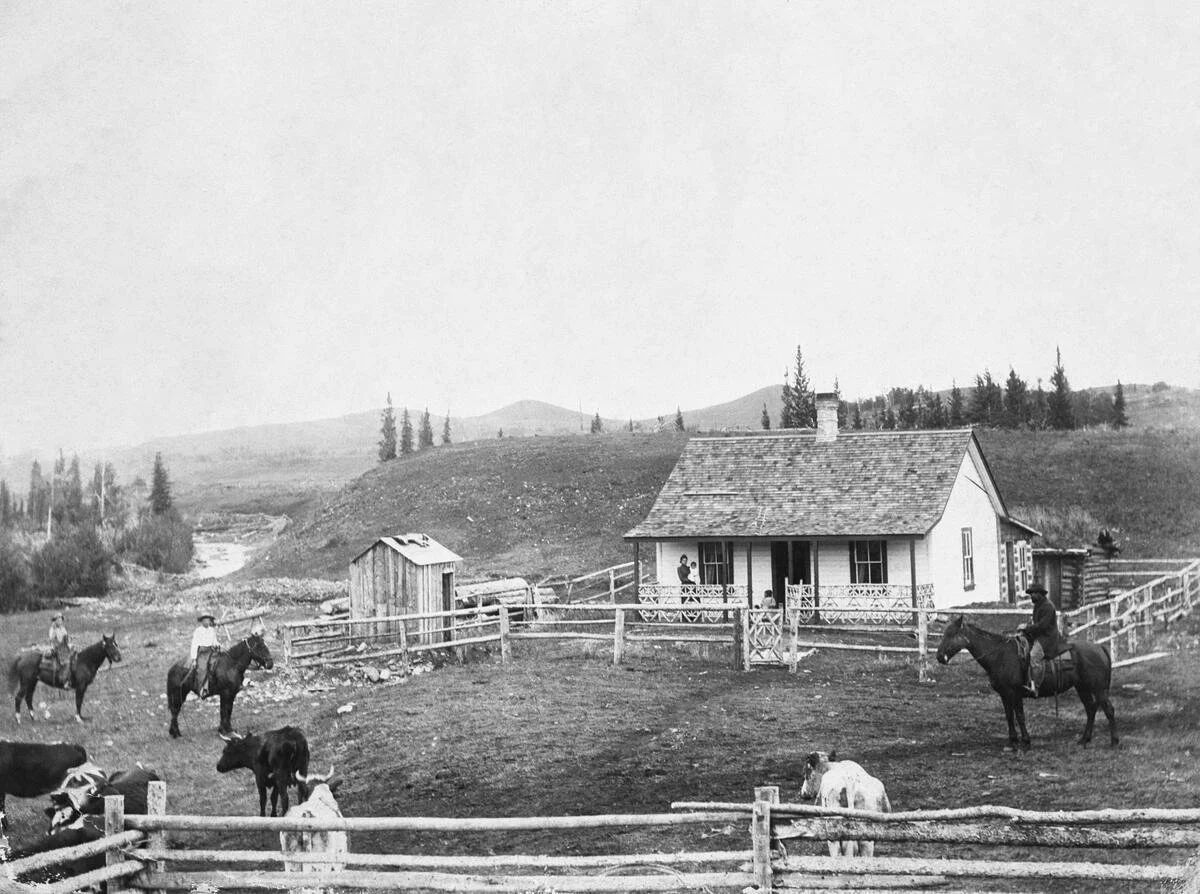
"John Ware ranch at Millarville, Alberta,” [ca. 1896], (CU1107957). Courtesy of Glenbow Library and Archives Collection, Libraries and Cultural Resources Digital Collections, University of Calgary, NA-266-1.
On a hot mid-summer day, an hour’s drive south-west of Calgary takes you to the north fork of Sheep Creek, a rural landscape buzzing with activity. Striking green ridges fold into gentle pastures, while the low hum of insects and sharp chirping of scuttling gophers rise above the steady hush of the creek. Nestled amidst nature’s peaceful hubbub is a flat piece of prairie, long grasses quivering beneath the warm breeze that passes over the land.
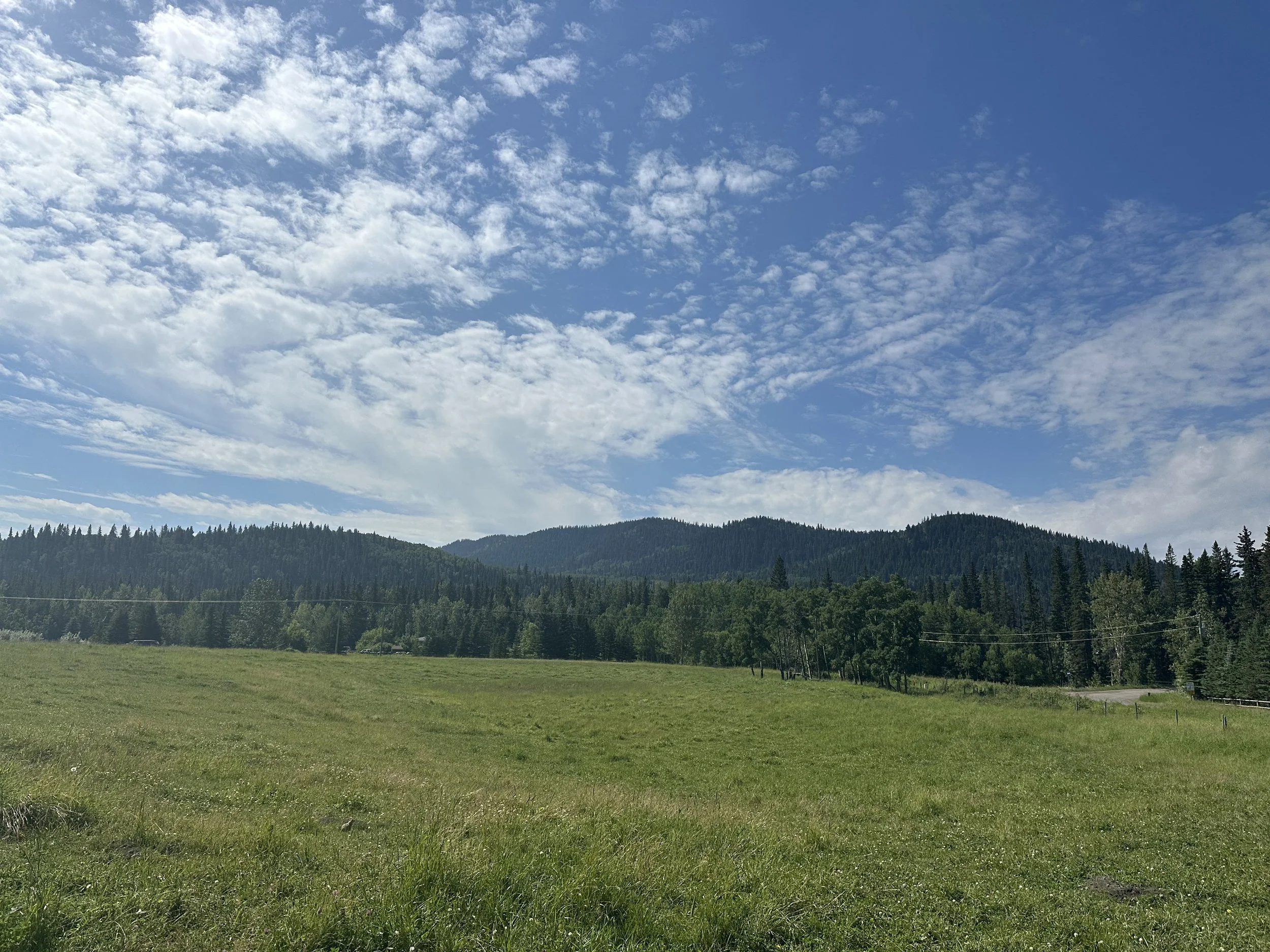
John Ware Ridge from the Millarville Homestead Site, July 2026.
But one hundred and thirty years ago, the scenery was untouched by rumbling roads and the tangling of telephone cables. Southern Alberta was a portrait of opportunity – for just $10, those in search of a new home could claim 160 acres of vibrant farmland.
Famous Black rancher, John Ware, made this his home in the late nineteenth century, along with his wife Mildred. In front of a steep hill next to Sheep Creek sat a frame house on a cobblestone foundation, complete with three bedrooms, a sitting room, and a lean-to with a kitchen. A hand-dug irrigation ditch behind the house remains visible today, its shallow depression branching into a Y-shape. The Ware’s also had a milk house, outhouse, barn, and other unidentified outbuildings. The Wares lived here from 1892 - 1902, as they established and grew their cattle business, raised their children, and adapted to homesteading life within Millarville’s ranching community.
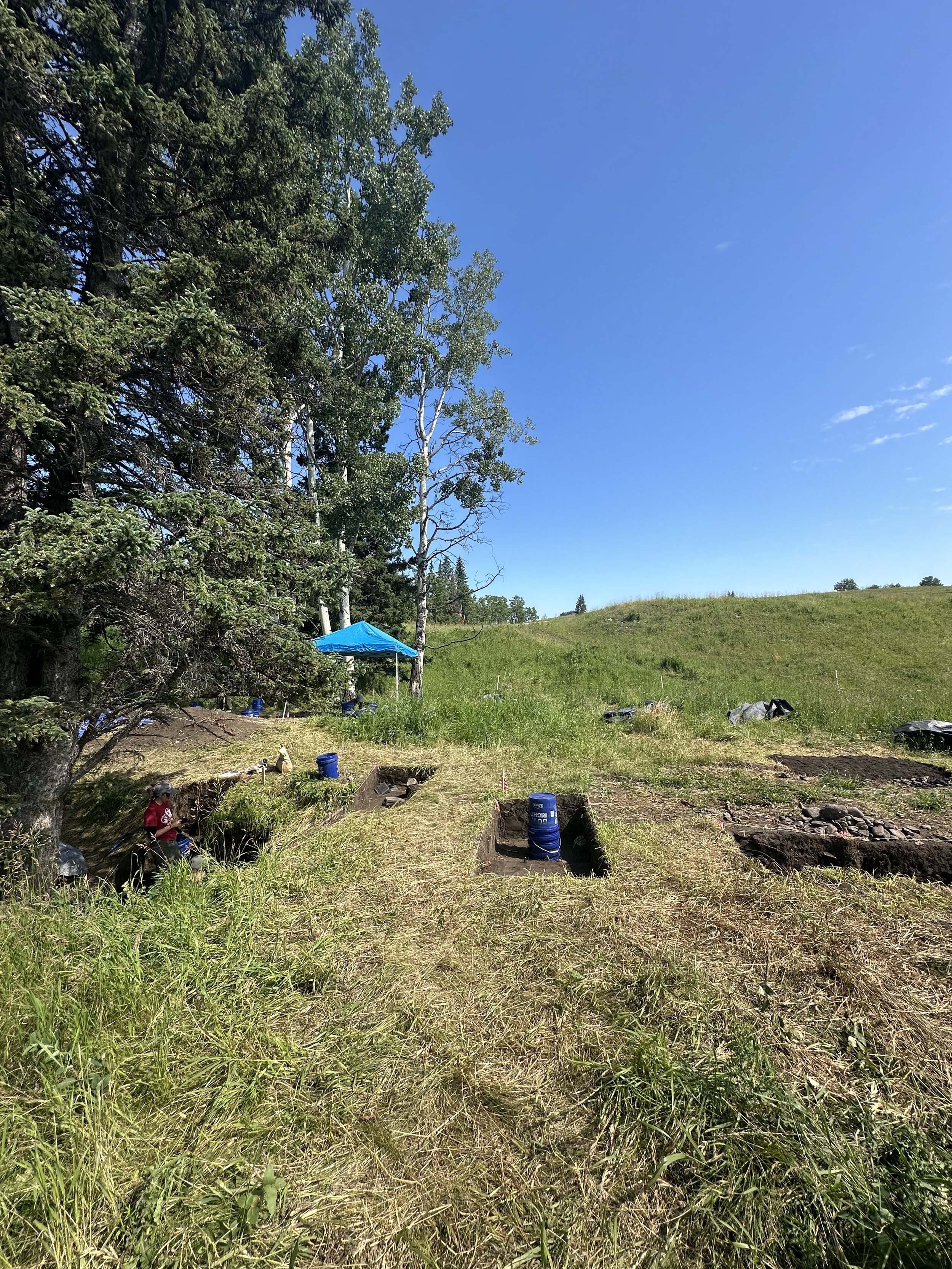
Approximate Location of Ware’s Homestead, July 2026.
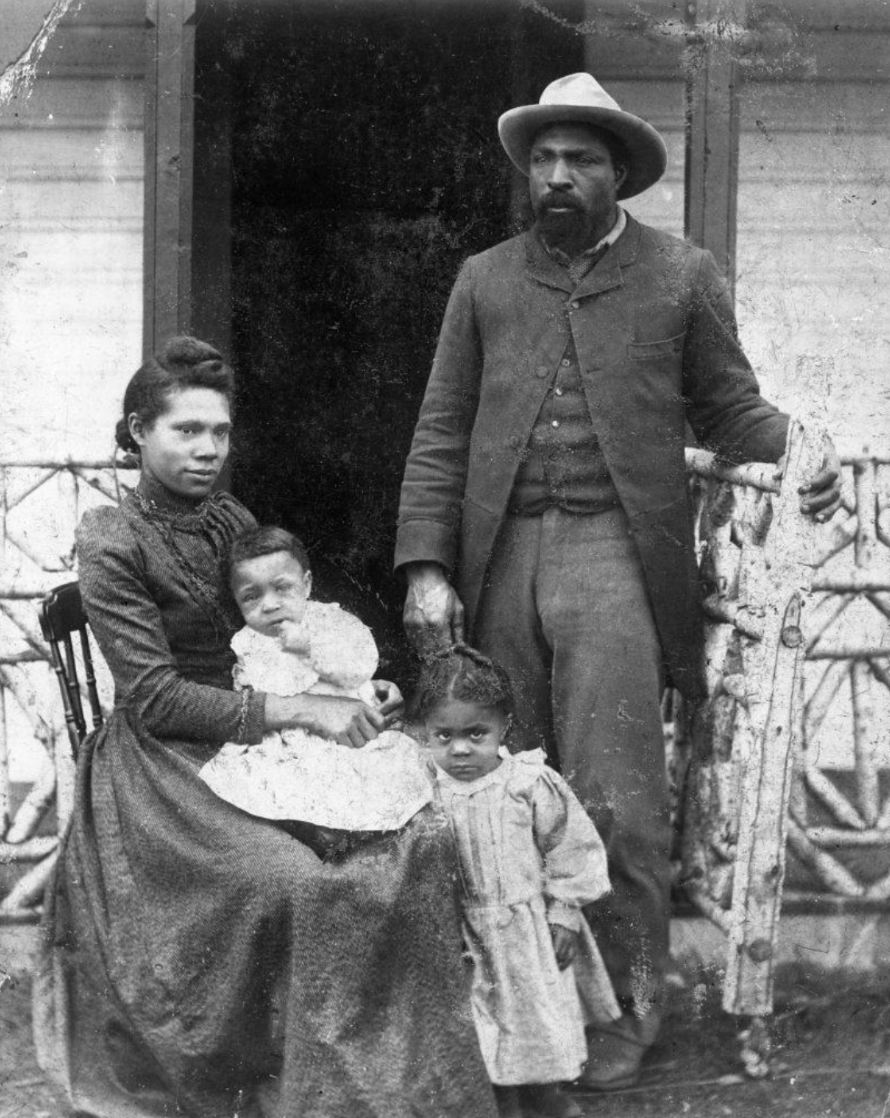
"John Ware, rancher, with wife Mildred and children Robert and Nettie in southern Alberta,” [ca. 1896], (CU1107289) by unknown. Courtesy of Glenbow Library and Archives Collection, Libraries and Cultural Resources Digital Collections, University of Calgary, NA-263-1.
When considering the historical record regarding John, much of what is known of his life does not come from himself or Mildred. Rather, recollections from early pioneers and memories from John and Mildred’s eldest children have created our modern-day image of John as Alberta’s first Black cowboy. There is a lack of primary sources attributed to John because he was illiterate, having been born into slavery in the southern United States. This means he never kept journals or correspondence that would have informed us of his life. John and Mildred also died within four months of one another in 1905, their time cut short due to illness and tragedy. Their five children were young when their parents passed with their oldest, Nettie, just twelve years of age. Therefore, there remains a gap between our understanding of the intricacies of John’s life and the legacy he has left behind in Alberta.
The Millarville homestead and its present-day excavation is of utmost importance to critical examinations of John’s life and the African American experience in nineteenth-century Alberta because Black history in the Prairies has too often been overlooked in Canadian history. Black individuals, families, and communities contributed to the development of Canada, and the Millarville homestead is a testament to the lasting impact and success of Black families in shaping Alberta’s social and agricultural landscape.
In 2017, Cheryl Foggo and Lindsay Amundsen-Meyer collaborated on the very first archaeological dig at the Ware family’s Millarville homestead. The single day excavation test recovered a hand-forged horseshoe, pre-1900 square nails, and a cow bone. This short dig revealed a larger need for archaeology at the ranch and proved to be a catalyst for further work, proving that artifacts from Ware’s time at the homestead could, and would, be found by archaeologists.
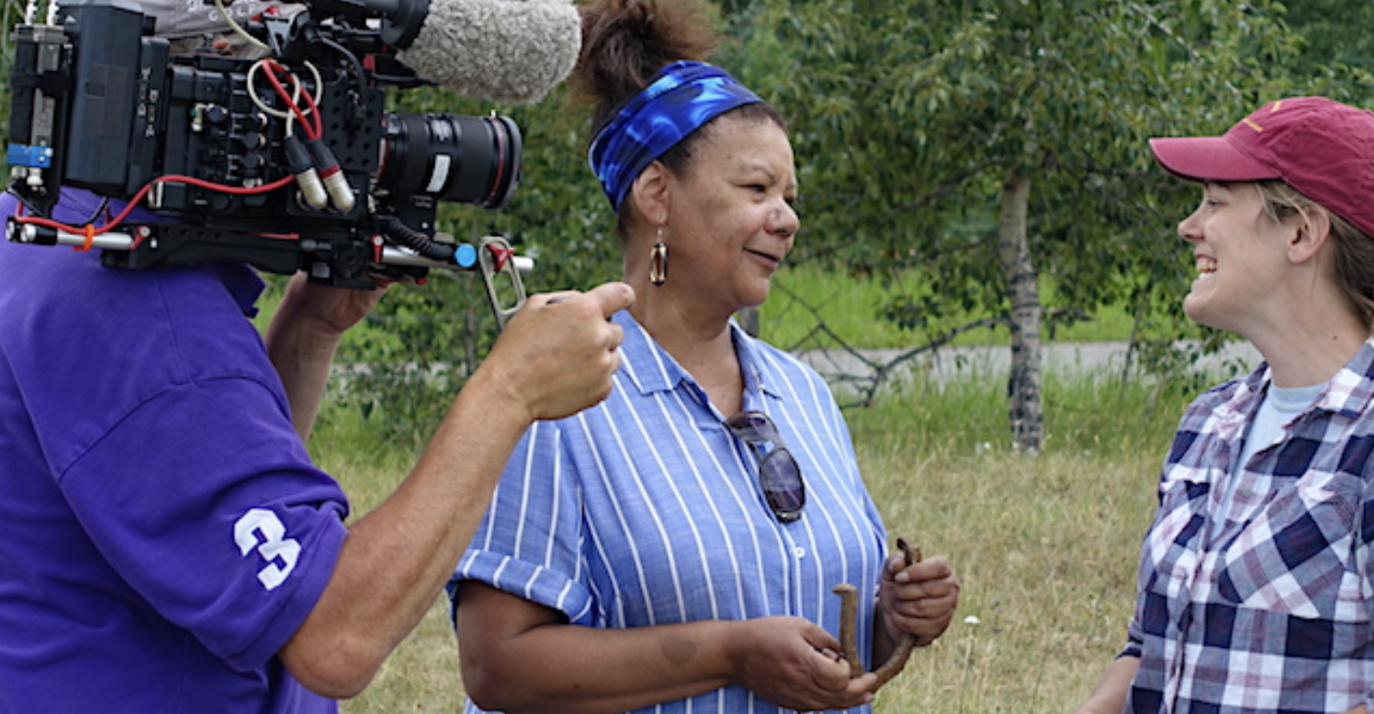
Cheryl Foggo and Lindsay Amundsen-Meyer at the Millarville Homestead Site, 2017.
By 2024, one day of digging climbed to three, and additions were made to the project – archaeologists from the University of Calgary, geophysical experts from the University of Alberta, and various community members. Among them was myself, a Master’s student in history at the University of Calgary, tasked to dig through the archives rather than the dirt in search of information about John’s homestead.
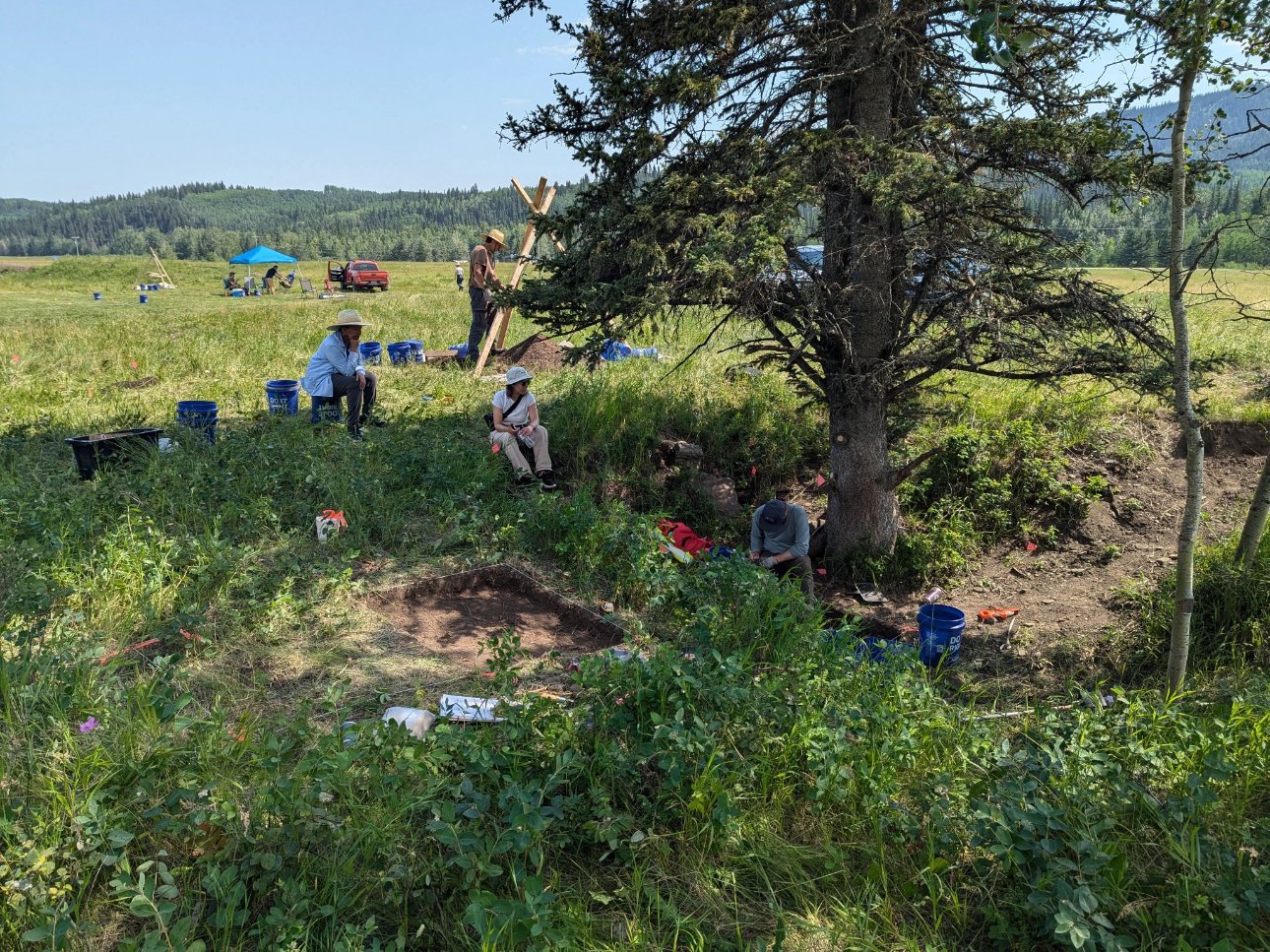
Millarville Archaeological Dig Site, July 2024.
Archival research felt daunting when my work first began. A top-down approach to historical research is always the easiest place to start; begin with what is well known and work your way through footnotes and bibliographies to find the main sources of information about an event, person, or place. Only one comprehensive biography has been written about John – John Ware’s Cow Country by Grant MacEwan. However, the 1960 book has constructed a mythology of John rather than offering a historically grounded account. It created a narrative built on pioneers’ recollections but spun elaborate stories about John to fill in the gaps of the unknowns of his life.
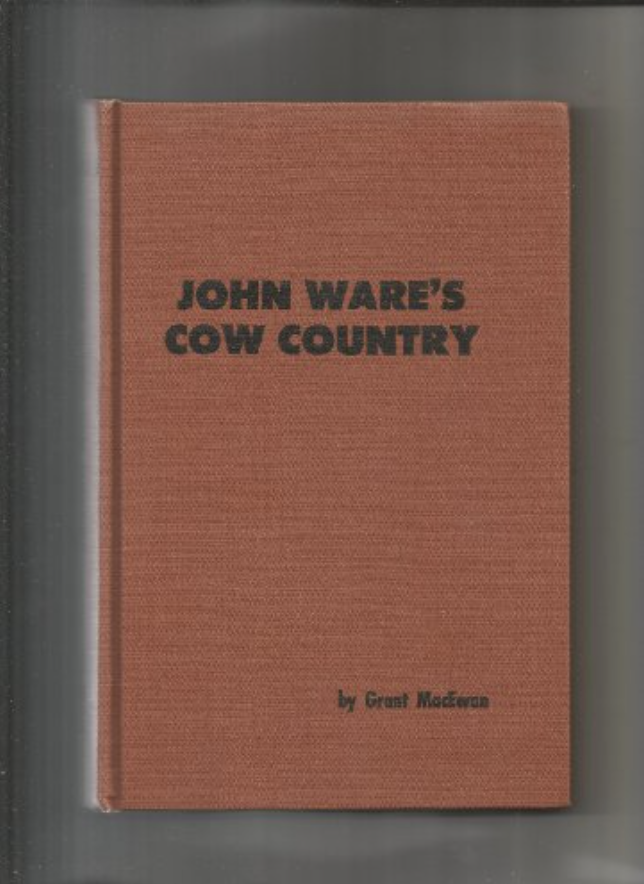
A Copy of John Ware’s Cow Country by Grant MacEwan.
Familiarizing myself with Cheryl Foggo’s influential work was necessary to learn about John from a historian who has dedicated years of her life to researching the Ware family and Black Prairie history. I spent time with her interviews, written work, and the 2020 documentary John Ware Reclaimed.
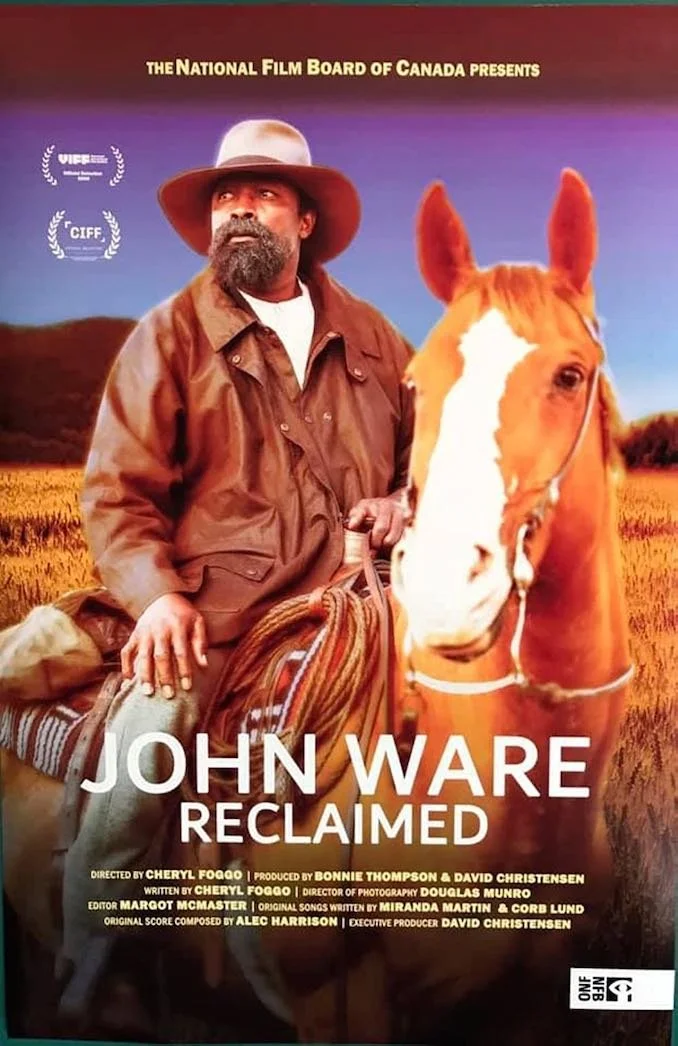
John Ware Reclaimed Documentary Poster, 2020.
An archival trip was still imperative to delve into the specifics of the Millarville homestead. In 2019, the Glenbow Museum moved most of its archival holdings and library to the University of Calgary. Housed at the Glenbow Western Research Centre in the Taylor Family Digital Library are the Ware and Lewis family fonds. This collection of historical documentation is most vital to the specifics of John and Mildred’s life, as well as their children and Mildred’s family.
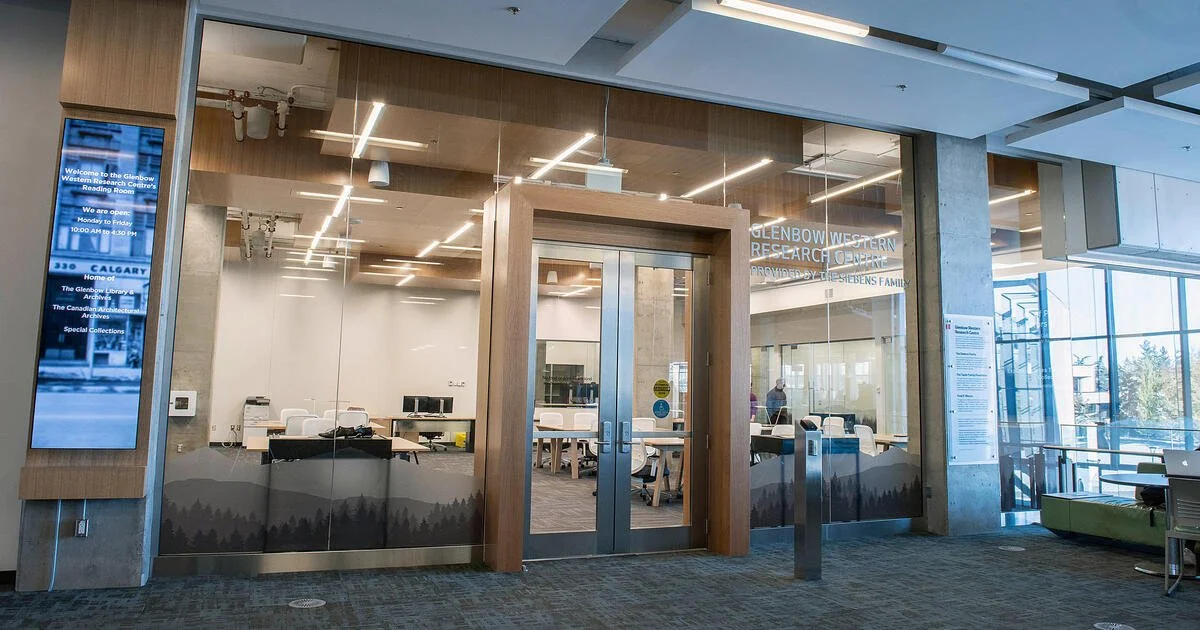
The Glenbow Western Research Centre, Taylor Family Digital Library.
The fonds are filled with documents and artifacts that are otherwise inaccessible online. There is a newspaper, still rolled up and now stuck that way, addressed to John at the Millarville homestead; Mildred’s handwritten letter on behalf of John establishing his cattle brand; pages of interviews with Nettie Ware about her childhood memories at the ranch; Arthur Ware’s pocket-sized New Testament from the 1910s, and much more. Yet the fonds provide more than historical curiosities. They provide a way for one to test “facts” from the historical record and provide a clear illustration of what the Millarville ranch looked like apart from historical photographs.
Memories from trustworthy ranchmen like Joe Standish, when compared to sporadic legends about John from the Calgary Herald, allow one to critically analyze fact over fiction. Standish worked for the Wares on the Millarville ranch, spending time with the entire family and offering the most accurate description available of the homestead. There are also interviews with family members about the milk house that went over the irrigation ditch behind the main house – Robert Ware remembered John sneaking up behind him and dunking him into the water after Mildred had told little Bob not to play in the water. These fragmented sources of letters, interviews, artifacts, and memories, have shaped where archaeologists searched, and are currently searching, for the homestead.
Now, in 2026, the archival and homestead digs have continued with success, each driving the other forward, showing that the work of the historian and the archaeologist are inseparable at the Millarville homestead. Artifacts like decorative household items have led me to research more about Mildred, looking at her life growing up in Toronto and how the aesthetics of the ranch house reflected her personal touch. Joe Standish’s description of the house’s layout has informed the archaeology team of the inner workings of the household, leading to new discoveries pictured below.
Just recently, one edge of the house’s cobblestone foundation was found.
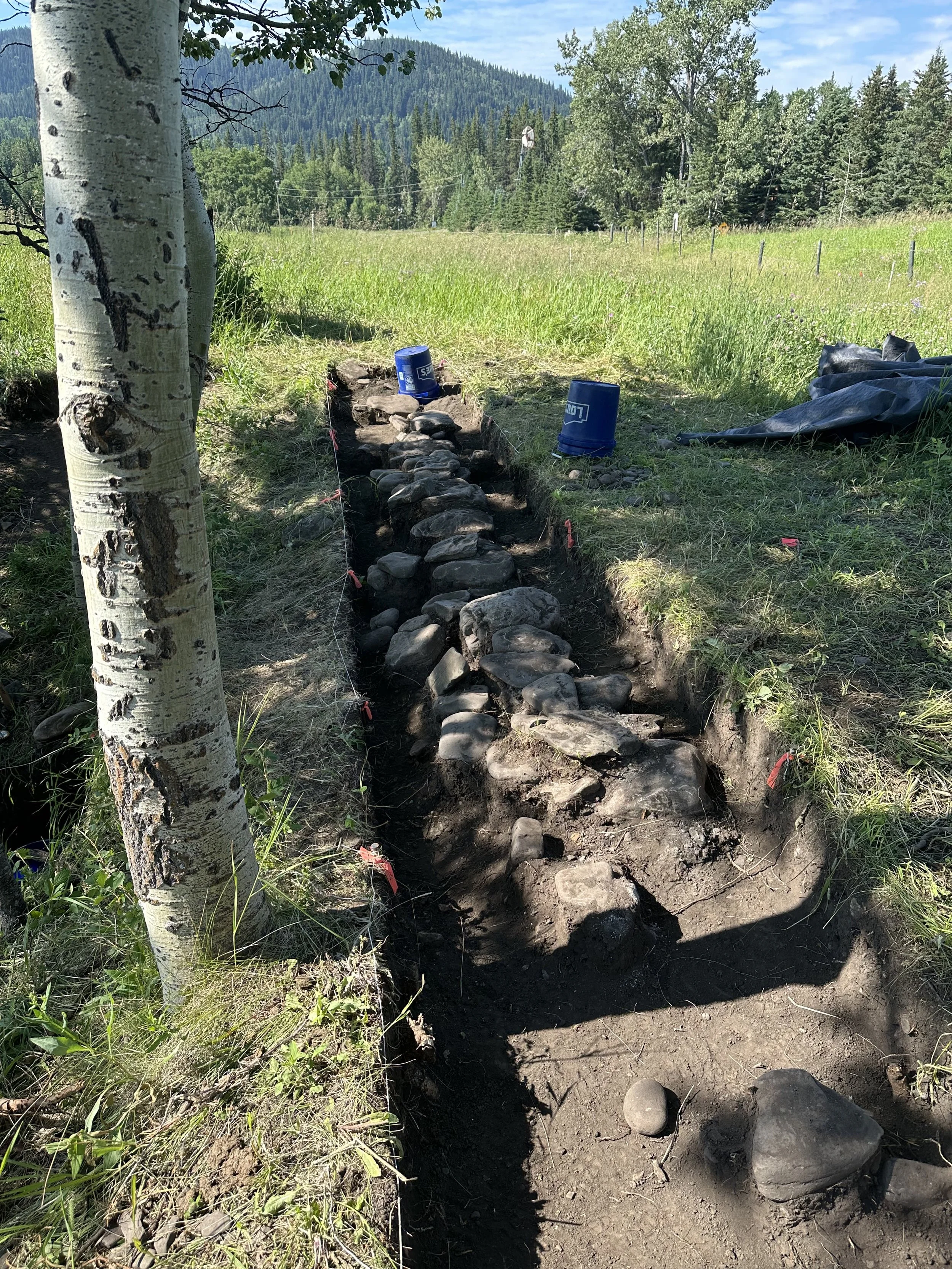
Cobblestone Foundation of the Ware Homestead, July 2026.
There are also buttons from Levi’s jeans, and wooden floorboards that have caved into the ground from the passage of time.
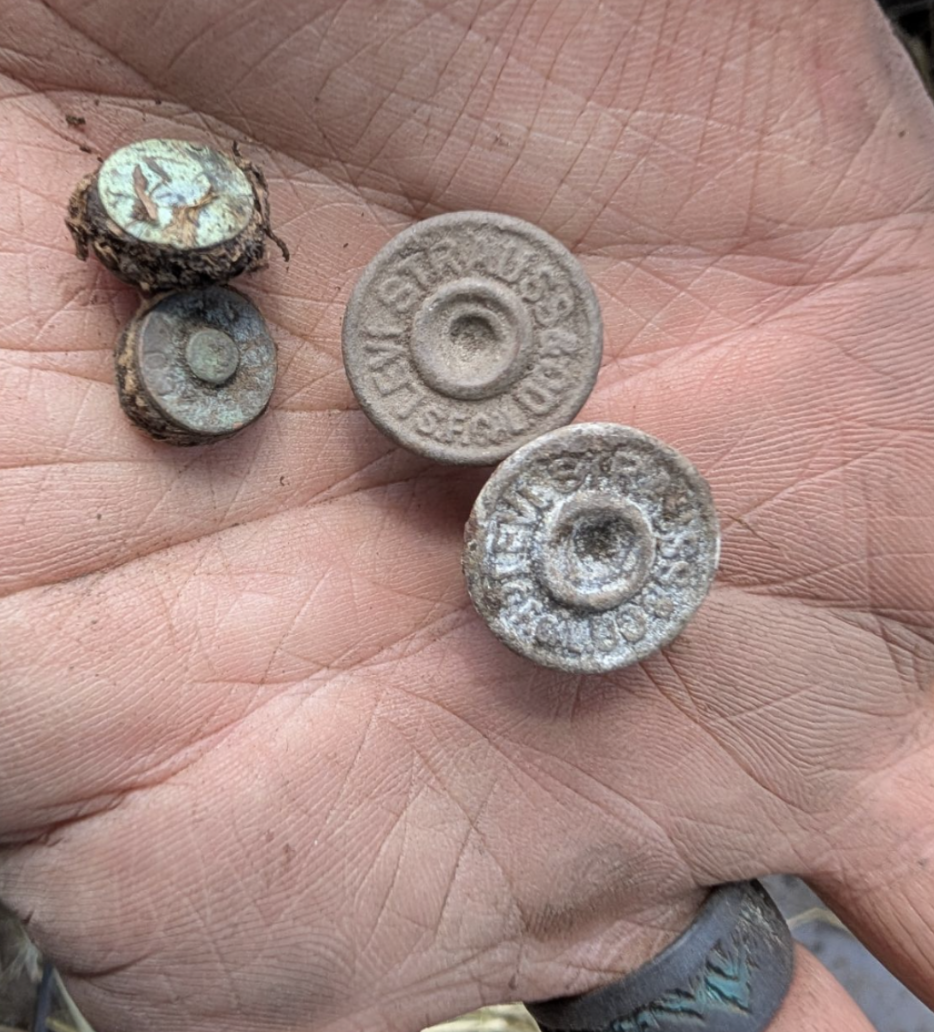
Levi’s Buttons from the Dig, July 2026. Courtesy of Lindsay Amundsen-Meyer.
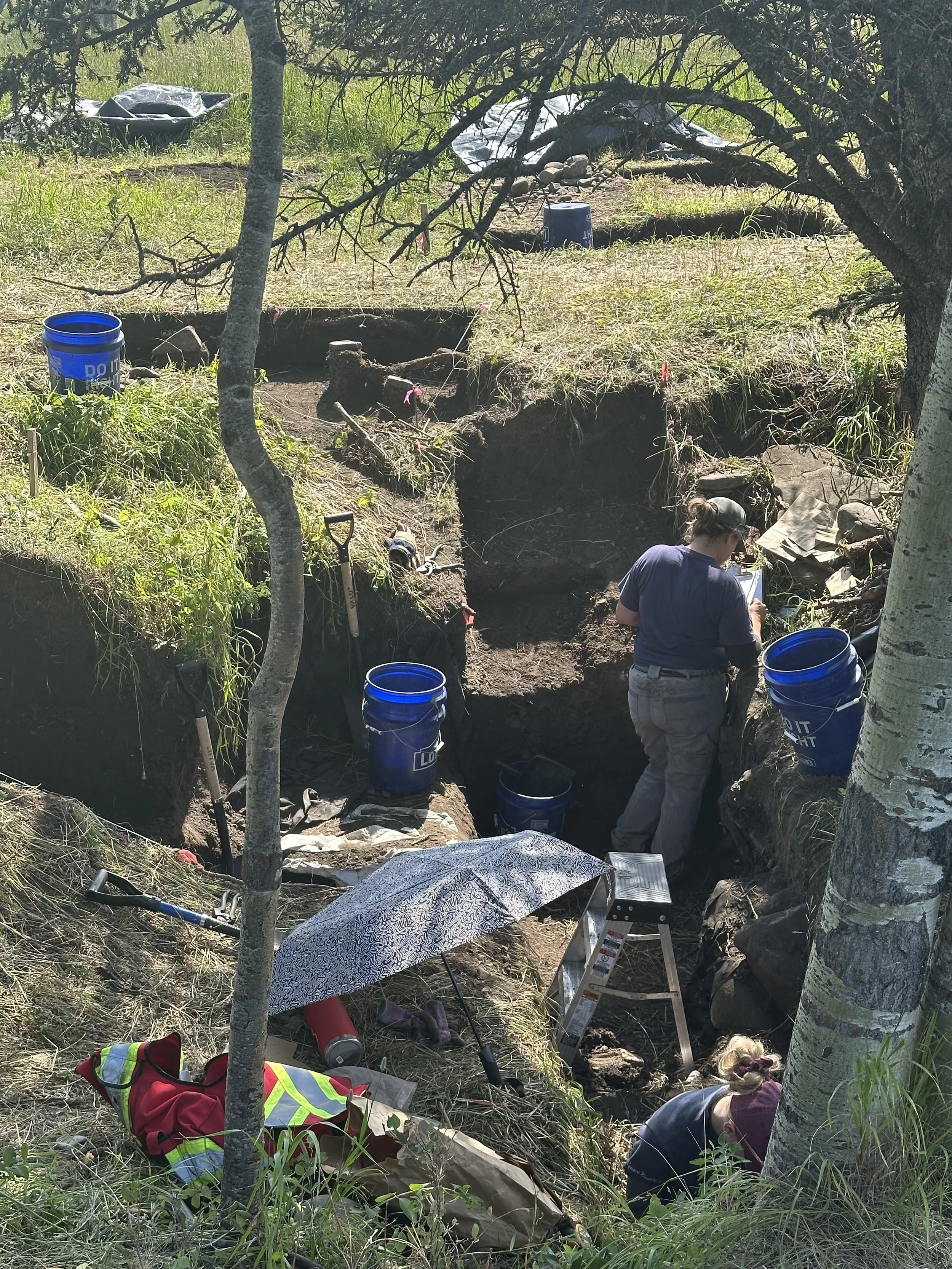
Finding the Floorboards at the Ware Homestead, July 2026.
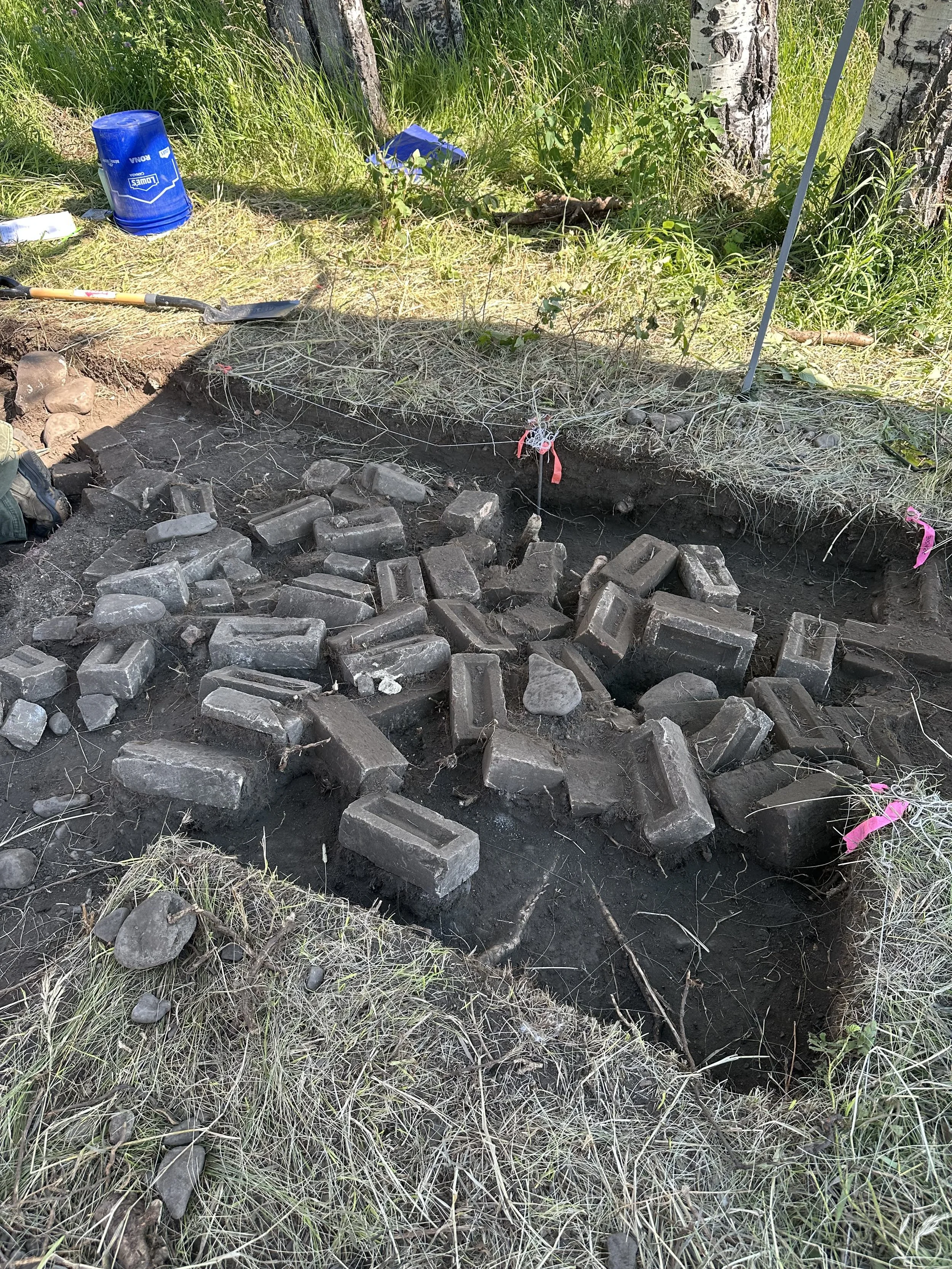
Toppled Bricks from the Ware Homestead, July 2026.
Another find: a pile of toppled bricks, possibly from the Cochrane ranch. With every archaeological discovery, new historical avenues emerge. Together, the archives and the soil allow us to move beyond legend and reconstruct the everyday lives of the Ware family.
For me, the physical link between archaeology and history has been the most rewarding part of this project so far. It is one thing to read a hundred-year-old document describing an irrigation ditch behind the house, and it is another to stand beside that same ditch, still visible in the prairie grass. The Millarville homestead reveals a fuller story not just of a remarkable family, but of the Black pioneers whose lives and contributions are deeply ingrained into the history of Alberta. I am deeply grateful to be a part of this work. Thank you to Lindsay Amundsen-Meyer and Cheryl Foggo for their mentorship and invitation into this history.
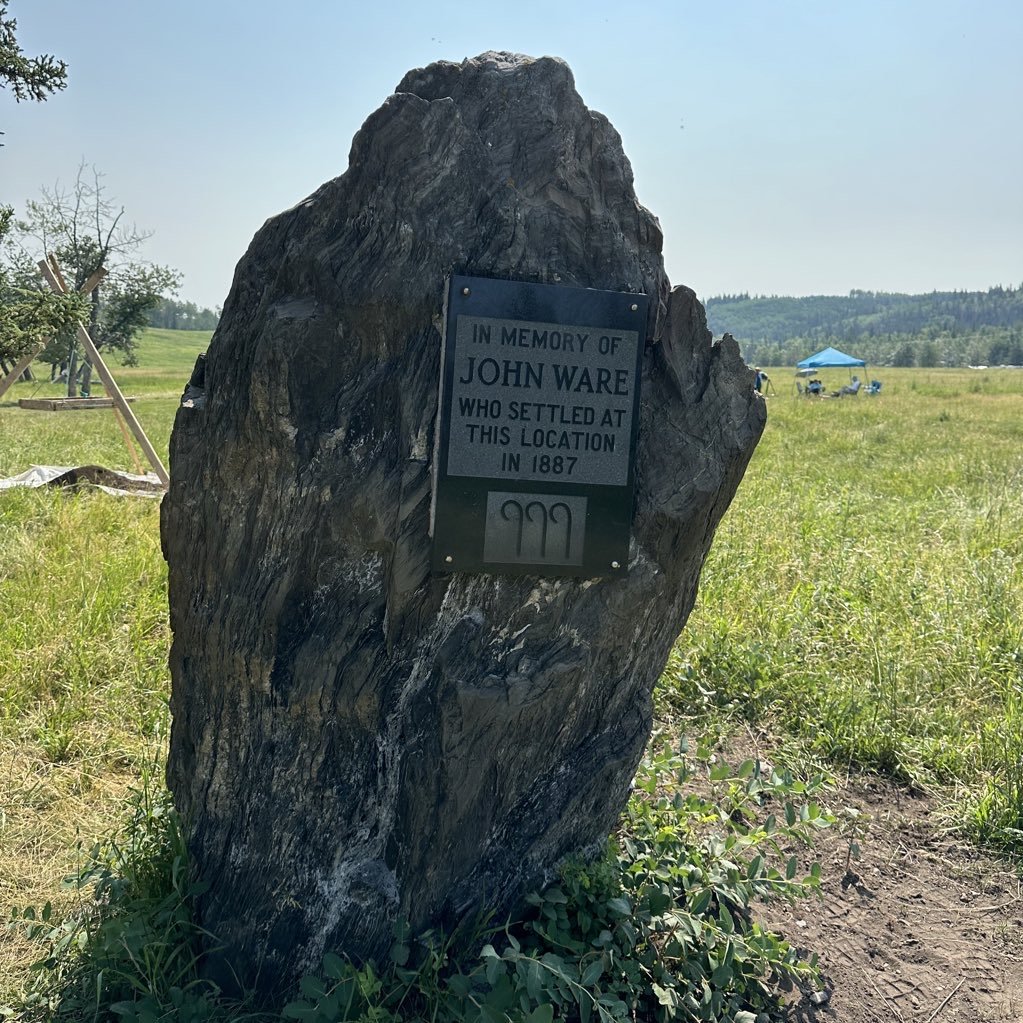
John Ware Monument, July 2024.
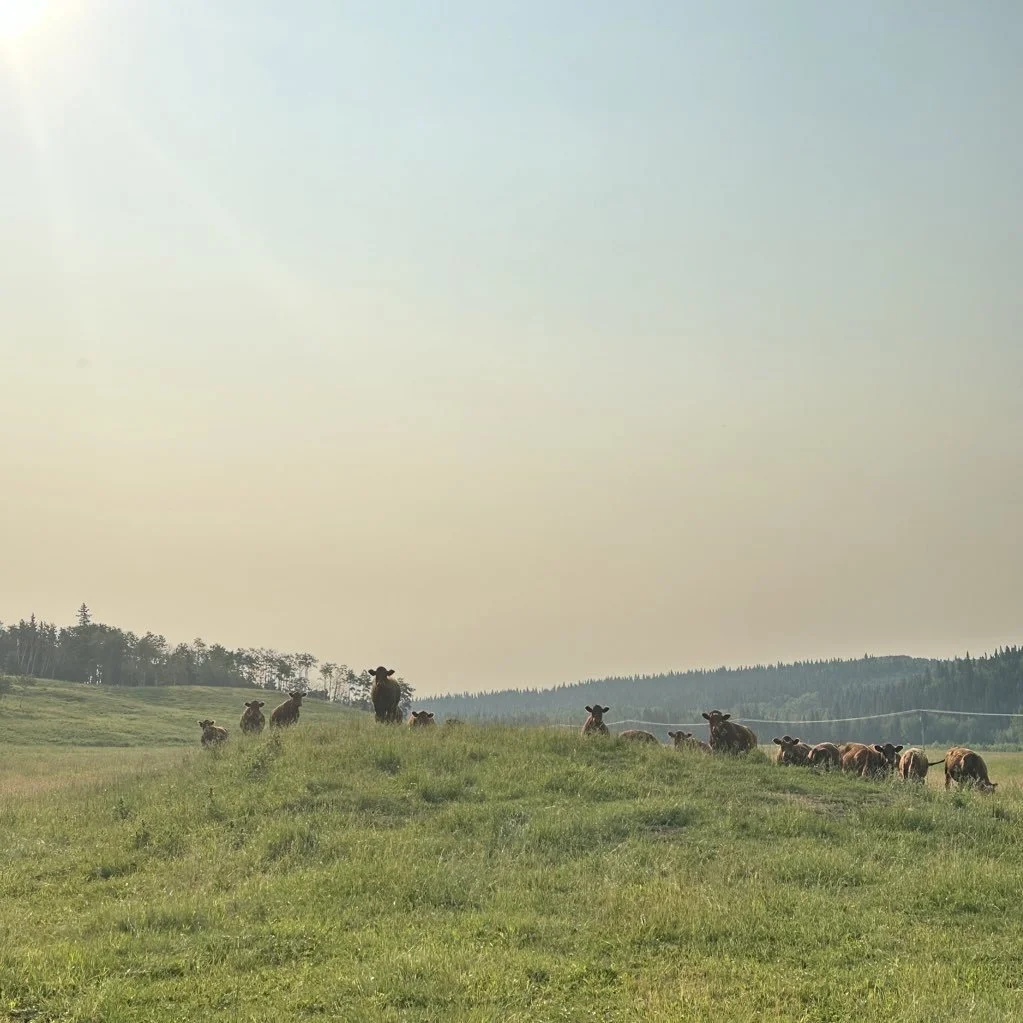
Curious Cattle Checking out the Dig Site, July 2024.
Peyton Neustaedter is the 2026 Historian in Residence. Peyton Neustaedter is a born-and-raised Calgarian whose research focuses on Black history in the Canadian Prairies. Through community collaboration and archival research, her work examines the activism and place-making efforts of Black communities in Alberta. Neustaedter has a particular focus on the use of historical newspapers to uncover everyday life.
Subscribe to Heritage Calgary’s newsletter and follow us on social media to follow along with the Historian.

The Historian in Residence is presented in partnership with Calgary Public Library.