Historian in Residence: Black Organizing and the Civil Rights Movement in Calgary
Peyton Neustaedter is the 2026 Historian in Residence
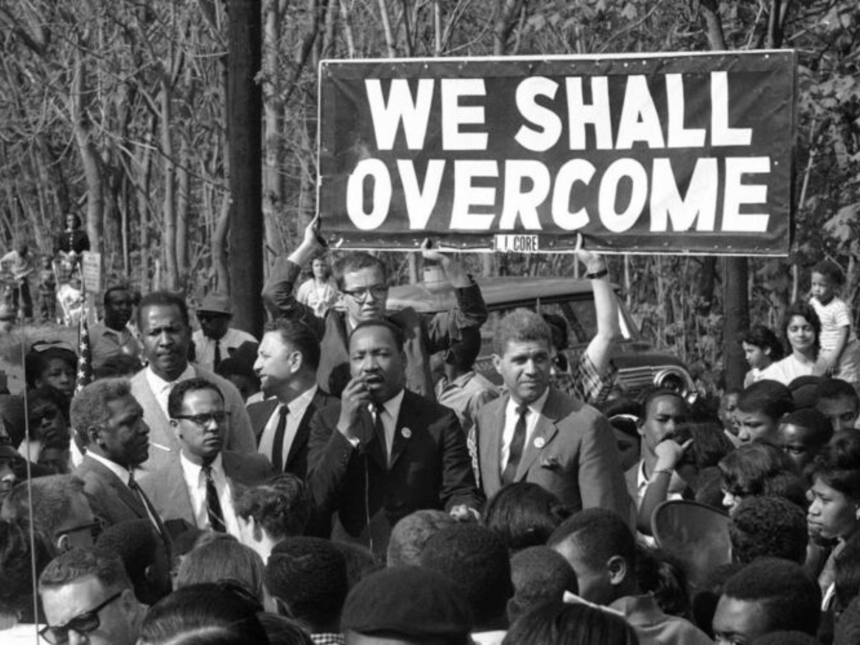
Dr. Martin Luther King Jr. addressing a crowd in Lakeview, New York, 1965. Image Courtesy of The Associated Press.
As Albertans, it is easy to look at black and white photographs of America’s civil rights marches in the 1960s and feel a sense of moral and geographical distance from our southern neighbours. Popular memory frames Canada as an interested yet quiet observer of the Civil Rights Movement, watching on with the hope for equality and justice across the border.
However, from 1950 to 1965, Alberta’s newspapers paint a vastly different picture of the province. The pages of the Calgary Herald and Calgary Albertan tell the story of Alberta’s Black community as an active force in political and social organizing for equality at home.
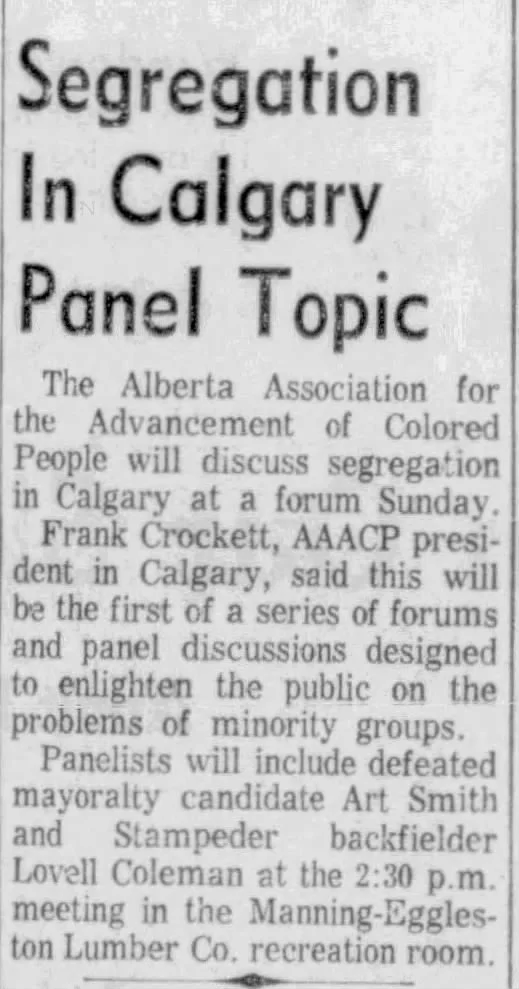
Black organizing in Calgary at the peak of the American Civil Rights Movement. “Segregation in Calgary Panel Topic,” Calgary Herald, 18 October 1963.
The infrastructure for Calgary’s local civil rights activism was forged directly out of cross-border labour organizing and was carried out through two main organizations: the International Brotherhood of Sleeping Car Porters (BSCP) and the Canadian League for the Advancement of Coloured People (CLACP).
Civil rights activist A. Philip Randolph founded the BSCP in 1925. He won the first collective bargaining agreement in the United States between a Black labour union and a large corporation, the Pullman Company. In Canada, sleeping car porters were unionized in 1945 because of the work of the BSCP. The organization also advocated for Black self-determination and employment equality across North America.
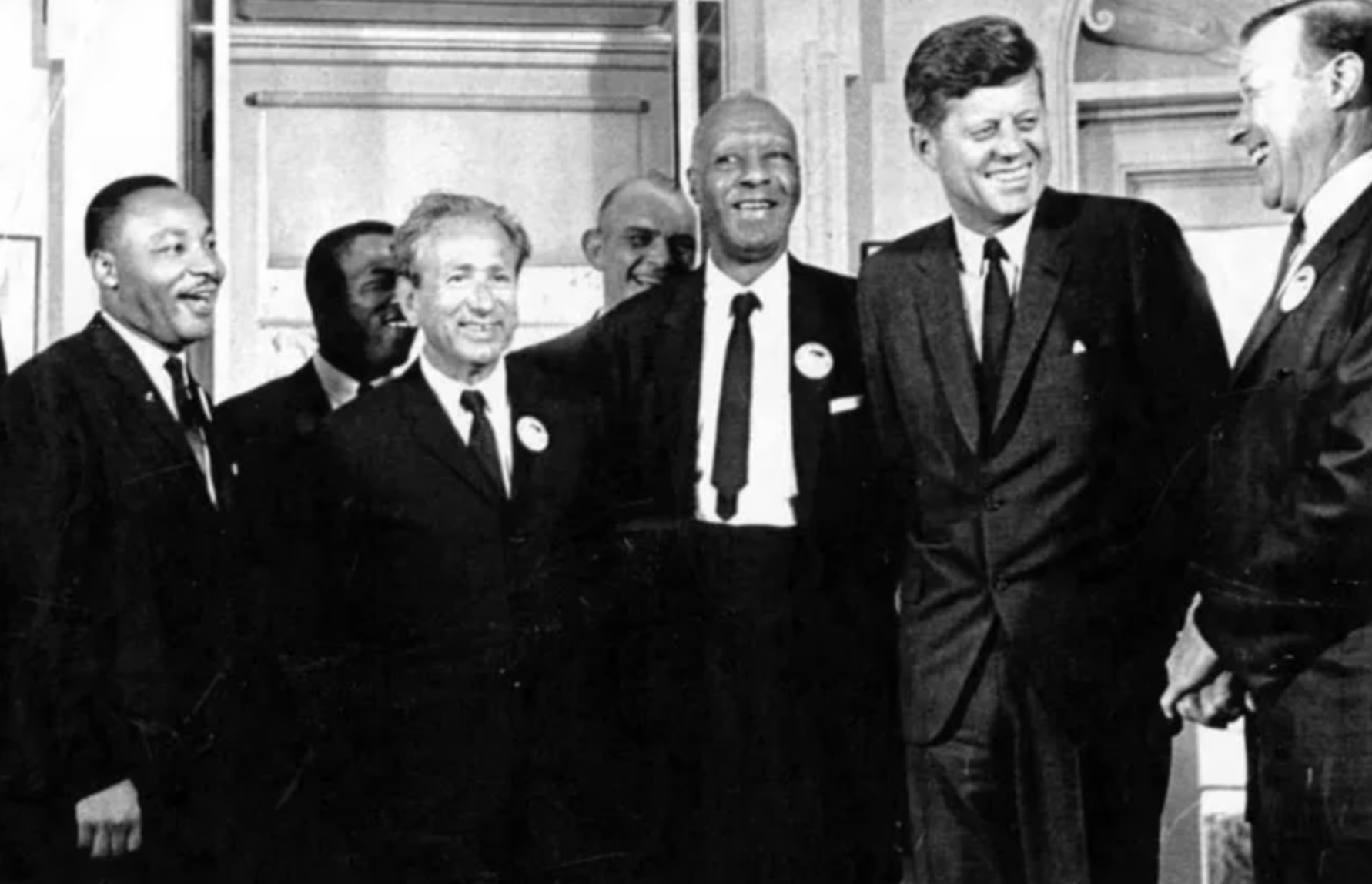
A. Philip Randolph next to John F. Kennedy, 1963. Randolph was an instrumental organizer of the March on Washington. Image Courtesy of The Florida Times-Union.
The CLACP was established in London, Ontario, by James Francis Jenkins in 1924. The organization’s main focus was Black social welfare, and it supported equality in the workforce and helped Black adults and youth with employment, education, and financial aid. [1]
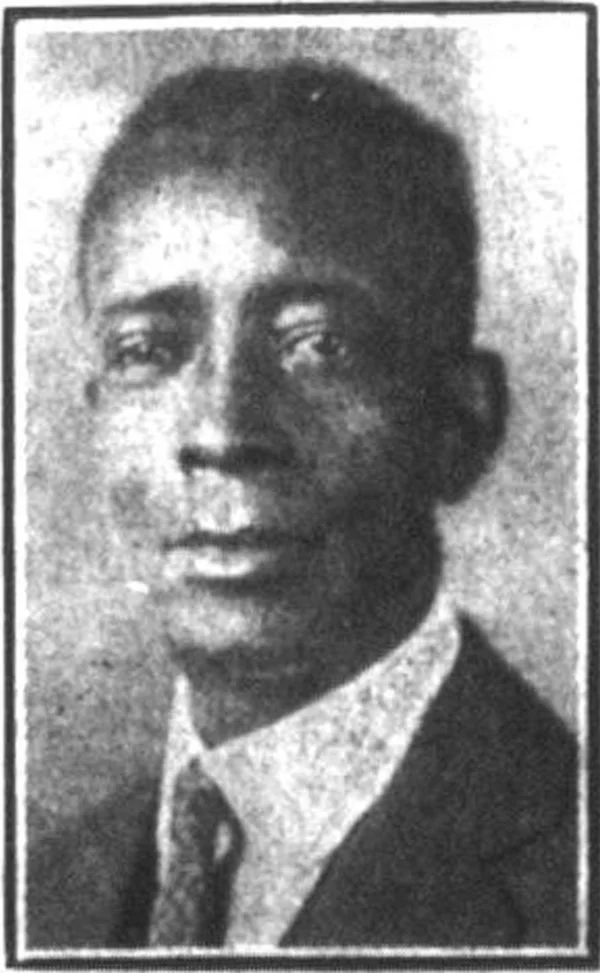
Jenkins was a Black civil rights activist, journalist, and editor of the famous Black Canadian newspaper, The Dawn of Tomorrow, which became the official mouthpiece of the CLACP. Image Courtesy of the Dictionary of Canadian Biography. [2]
In 1945, leaders of the BSCP, A. Philip Randolph and Bennie Smith, embarked on a tour across Canada to strengthen BSCP divisions and establish local branches of the CLACP. The Calgary Albertan reported that upon Randolph and Smith’s visit to Calgary, a local division of the BSCP, a ladies’ auxiliary, and a branch of the CLACP were established. During the rest of Randolph and Smith’s Canadian tour, CLACP branches formed in Toronto and Vancouver.
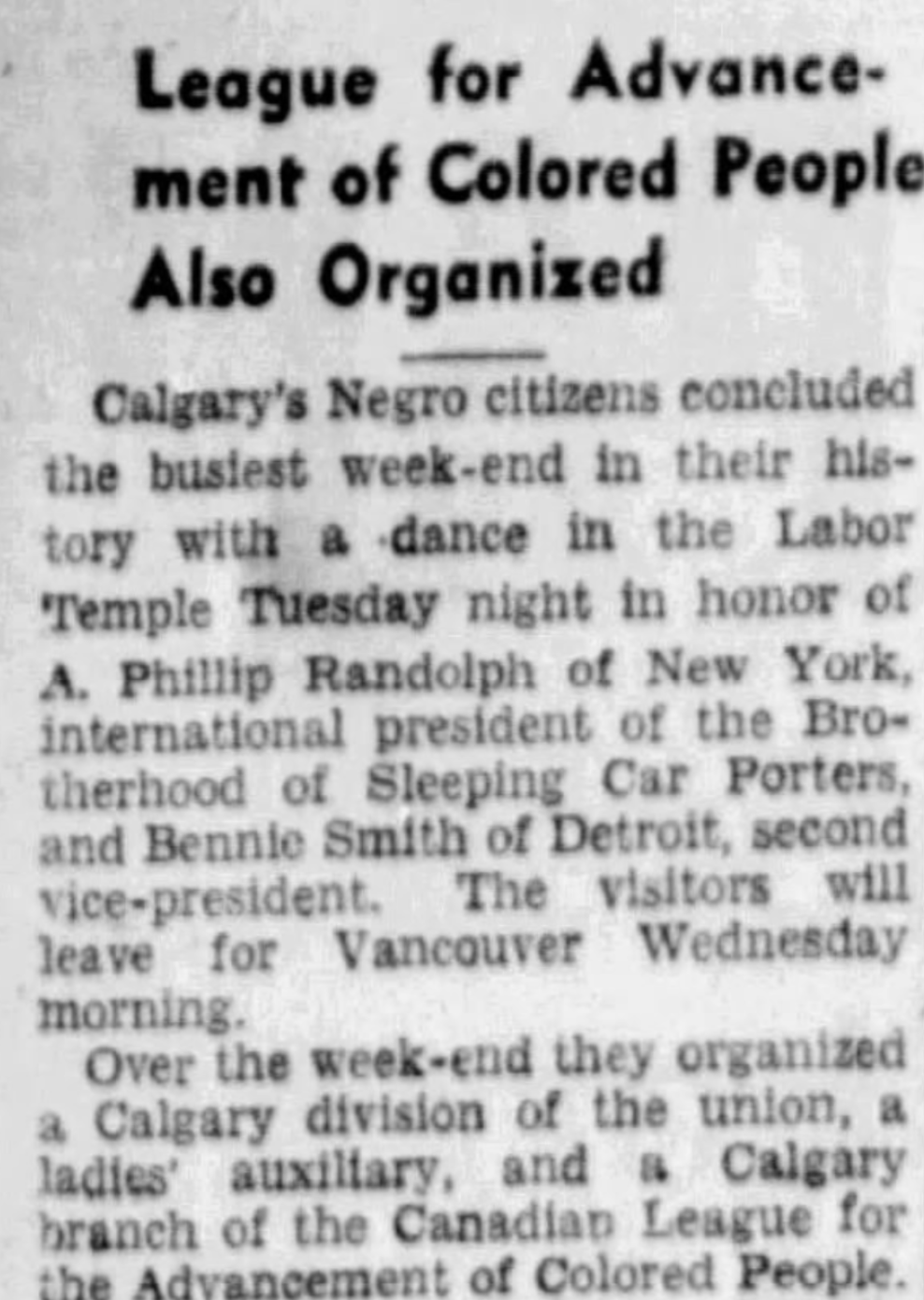
“Car Porters Form Union,” The Calgary Albertan, 25 July 1945. This clipping refers to an event held at the Calgary Labour Temple, a site on Heritage Calgary’s Inventory of Evaluated Historic Resources. The AAACP and BSCP held many of their meetings there during the 40s and 50s.
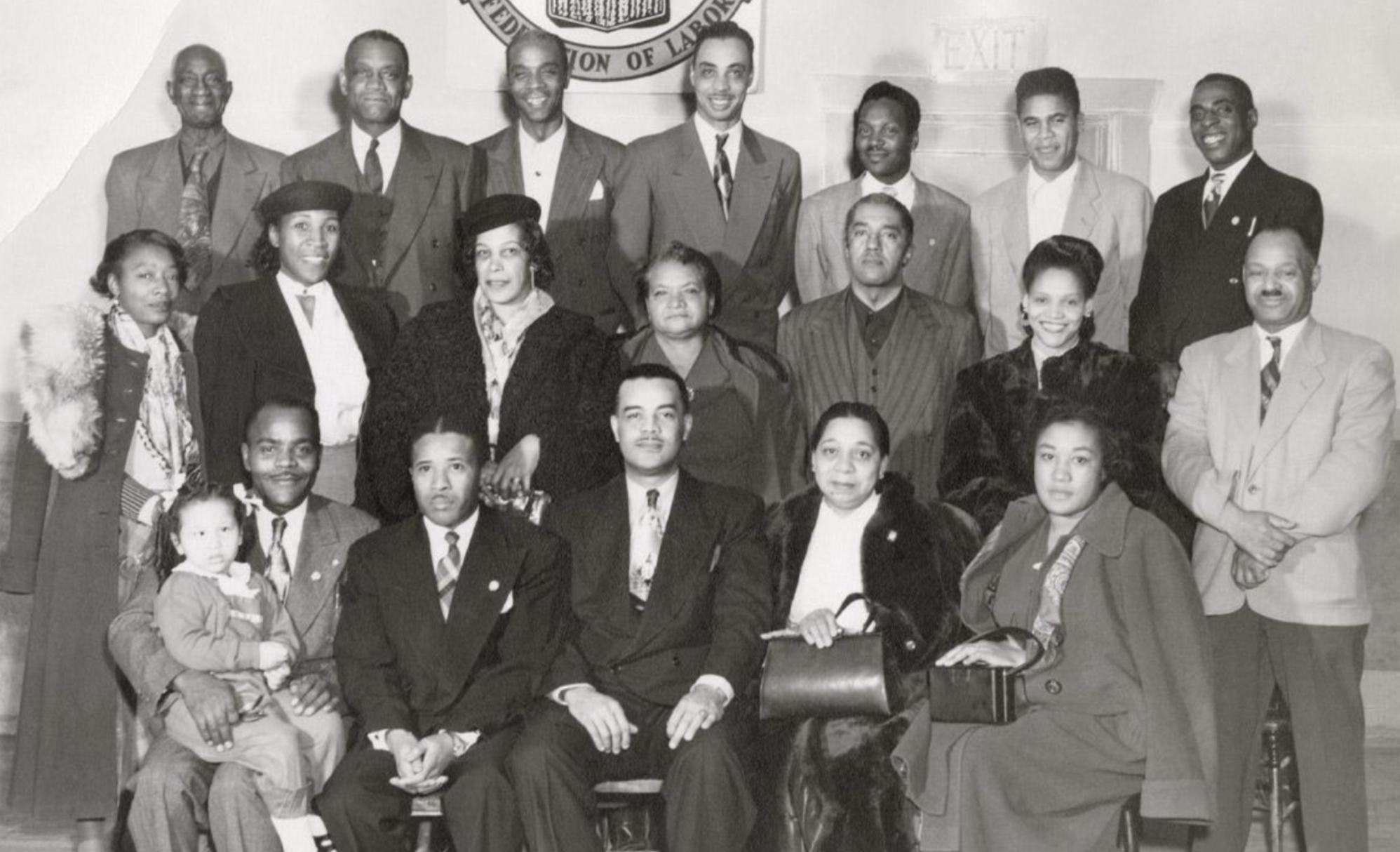
Calgary’s local Brotherhood of Sleeping Car Porters Division, ca. 1941-42. The division was active prior to 1940. Many of the individuals pictured were also members of the AAACP. Image Courtesy of Libraries and Cultural Resources Digital Collections, University of Calgary, PA-3439-6.
Vancouver’s CLACP branch was renamed the British Columbia Association for the Advancement of Coloured People at an unknown date with a formal establishment recorded in 1958. [3] Likewise, Calgary’s local CLACP branch was most likely renamed in the same fashion as Vancouver’s as they became the Alberta Association for the Advancement of Coloured People (AAACP) by the 1950s.
The AAACP was most active from the late 1950s to the mid-1960s, at the height of the American Civil Rights Movement. The organization sought fair employment, housing, and social practices in Alberta through legislation, education, and public outreach.
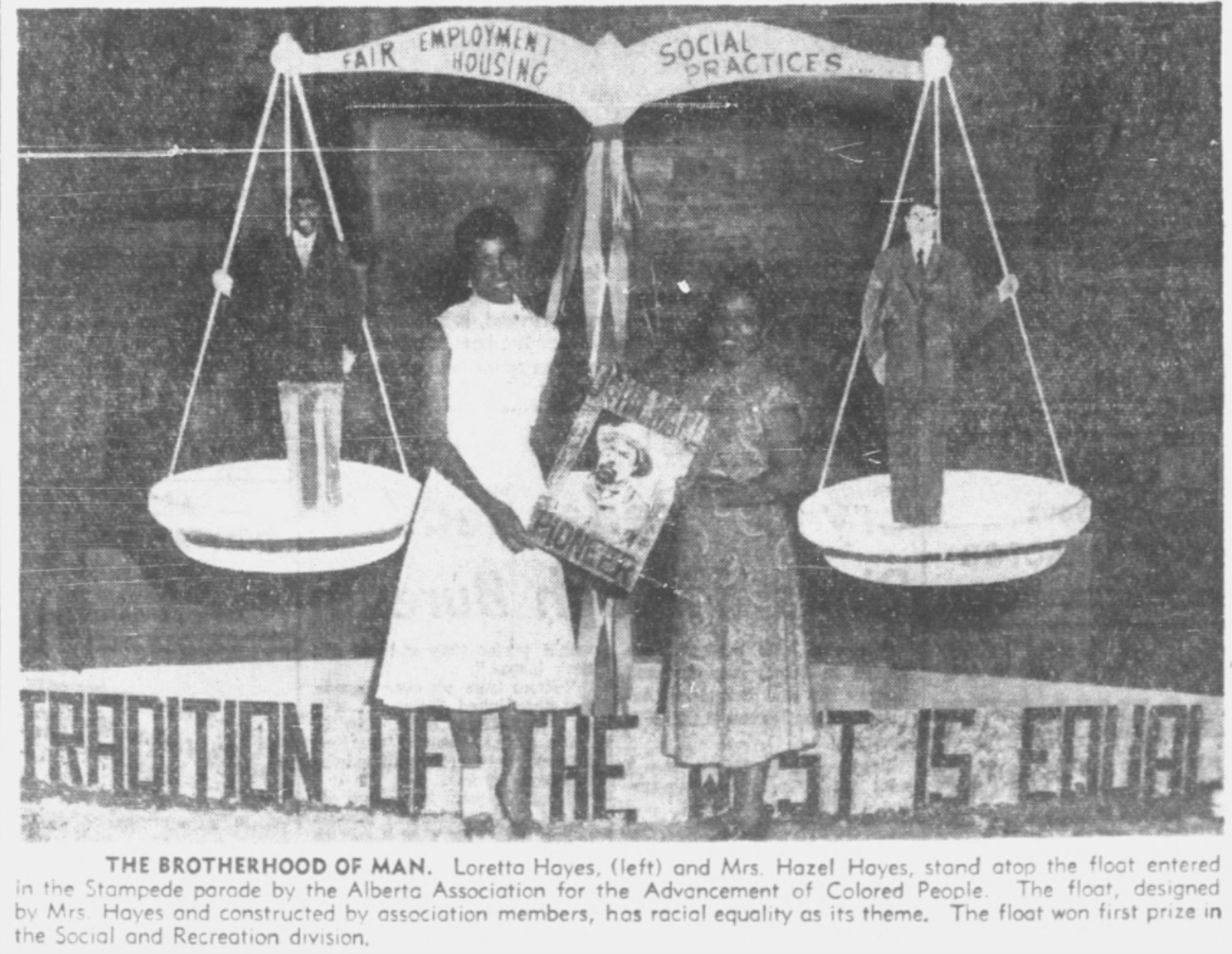
The AAACP’s Stampede parade float in remembrance of John Ware, 1956. The bottom of the float reads: The tradition of the West is Equality. “John Ware Remembered At Stampede,” Calgary Herald, 9 July 1956.
Under the leadership of figures like Ted King, the brother of Canada’s first Black woman lawyer, Violet King, the AAACP adopted legislative tactics similar to those of civil rights activists in the Southern US to combat discrimination in Calgary.
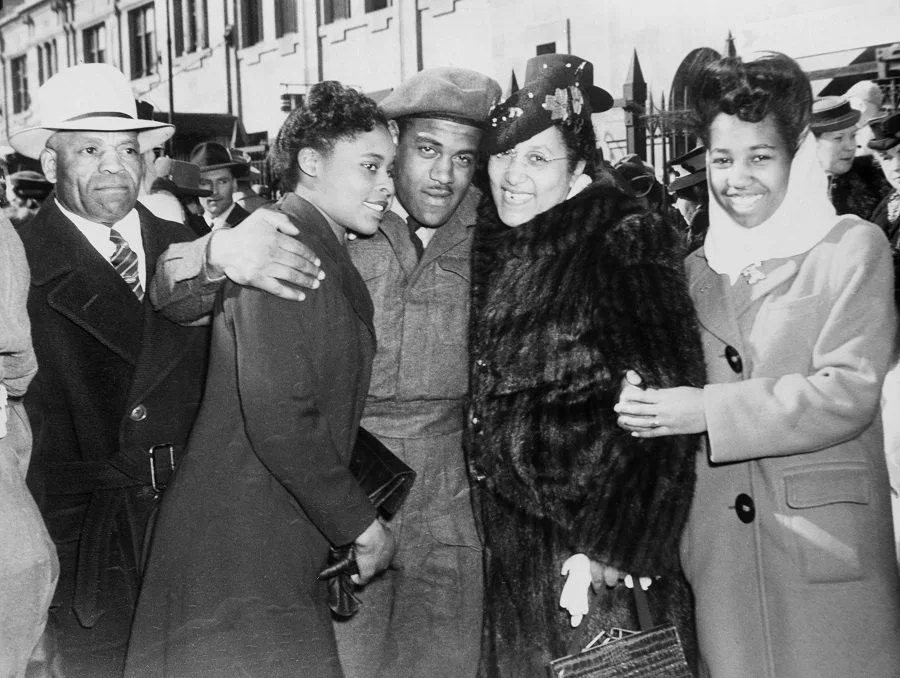
Ted King embraced by family upon his return to Calgary, 1946. Image Courtesy of the Courtesy of Libraries and Cultural Resources Digital Collections, University of Calgary, NA-4987-5.
Famously, the 1959 King v. Barclay case made front-page news across Canada and illustrated King’s confrontational approach to racism. The case awoke Canadians to the fact that anti-Black discrimination existed at home and not only in the States.
King phoned Calgary’s Barclay Motel on May 13, 1959 in search of friend Jim Pelley. He gave John Barclay, the motel’s owner, Pelley’s description. Barclay replied that they “don’t allow coloured people here,” and hung up the phone. King decided to drive to the motel and investigate the matter further. When he asked for a room, he was refused, despite the vacancy sign being displayed. [4]
In court, King stated that he suffered “humiliation, indignity and insult” as a result of the treatment. [5] Newspapers across Canada picked up the story to tell King and Barclay’s sides of the story.
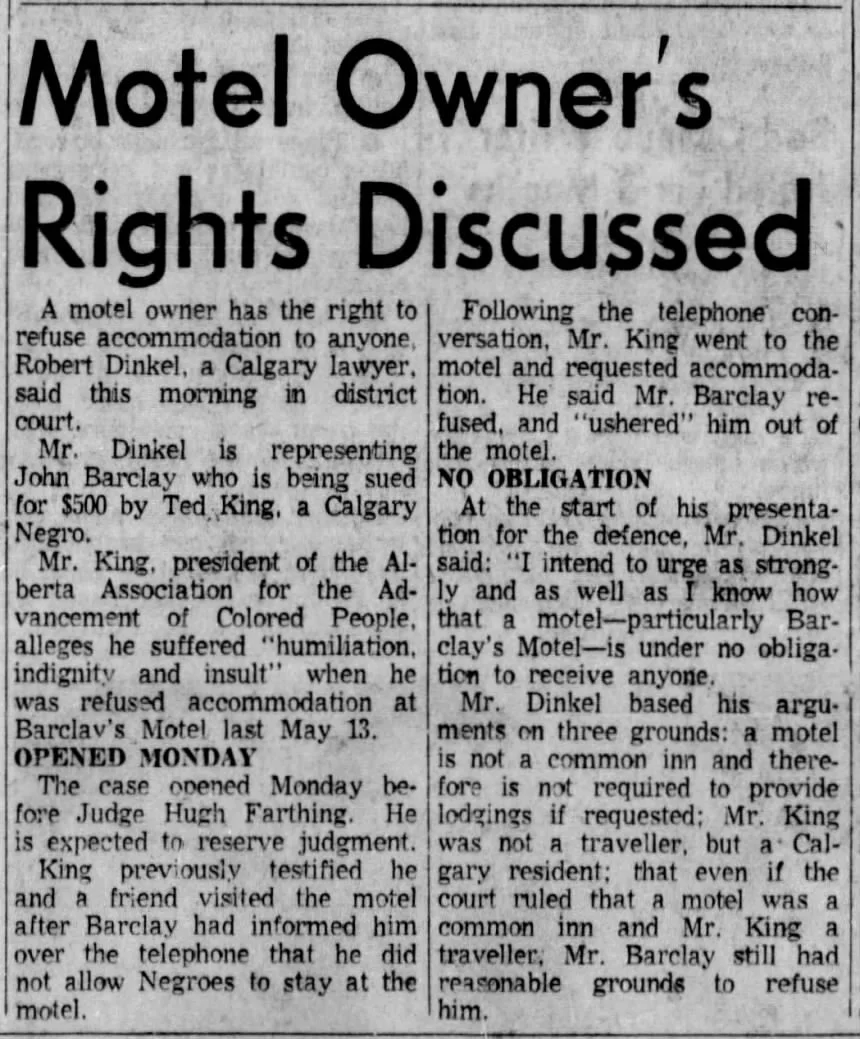
“Motel Owner’s Rights Discussed,” Calgary Herald, 29 October 1959.
The case was appealed to the Alberta Supreme Court and King lost. However, King was able to unveil a legal loophole in the Innkeepers Act that could be used for discrimination. The Act deemed that all inns were required to serve a person if they had a vacancy. For an establishment to be declared an inn, it had to provide lodging and food to guests. As Barclay’s Motel did not serve food, it was not an inn. In 1961, an amendment was made to the Act, removing this requirement from the legal definition of an inn.
In 1961, the AAACP elected its first woman president, Hazel Hayes. Three years prior, she had been crowned the orgnanization’s first queen.
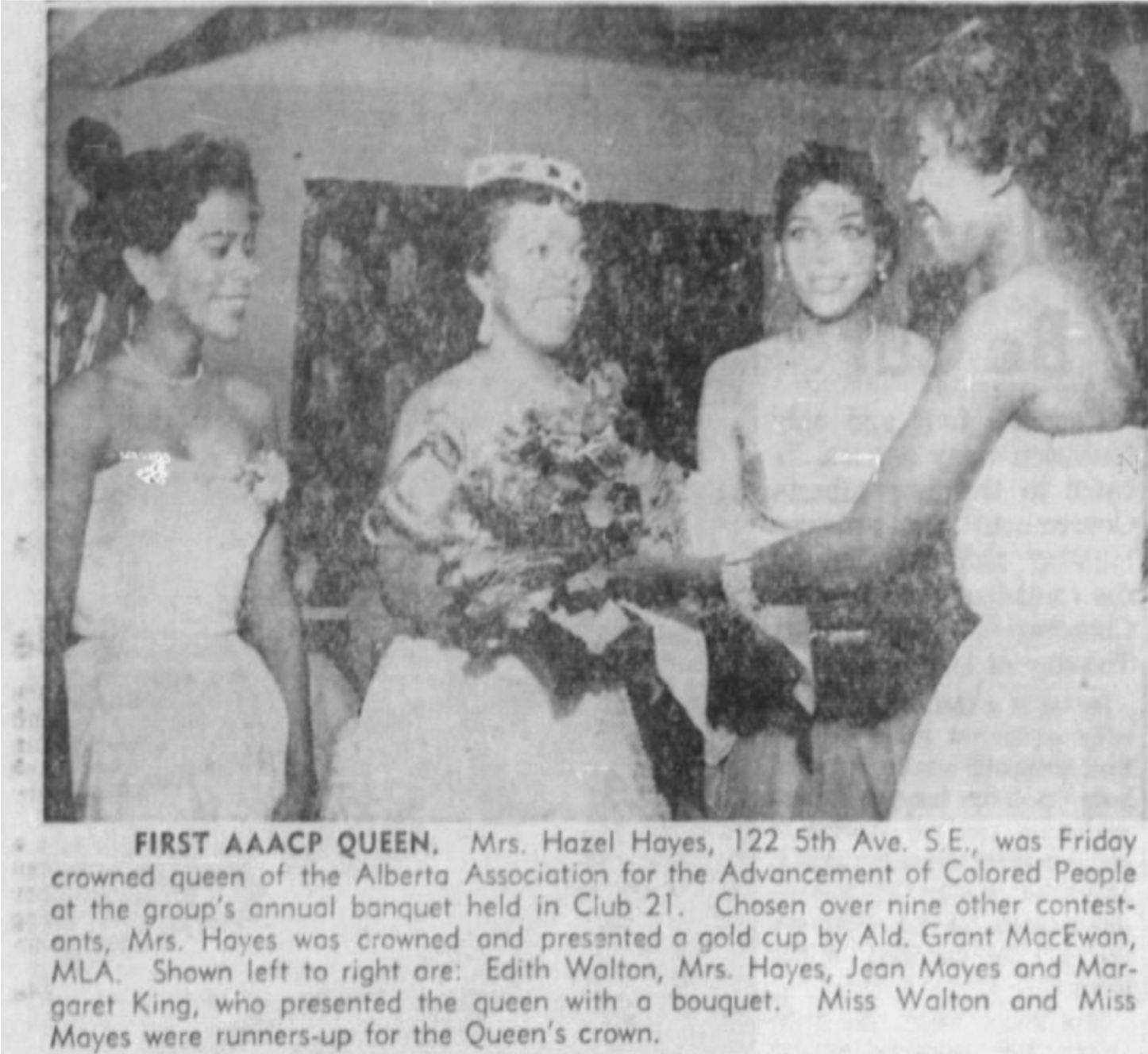
Hazel Hayes crowned first AAACP queen, 1958. “First AAACP Queen,” Calgary Herald, 28 June 1958.
Under Hayes’ leadership, the AAACP endorsed the later-rejected Fair Employment Practices Act which was put forward by the Calgary Labour Council. Ontario, Manitoba, Nova Scotia, and British Columbia each banned discrimination in the workplace based on gender, race, and religion in the 1950s, yet Alberta remained without a human rights act until 1966.
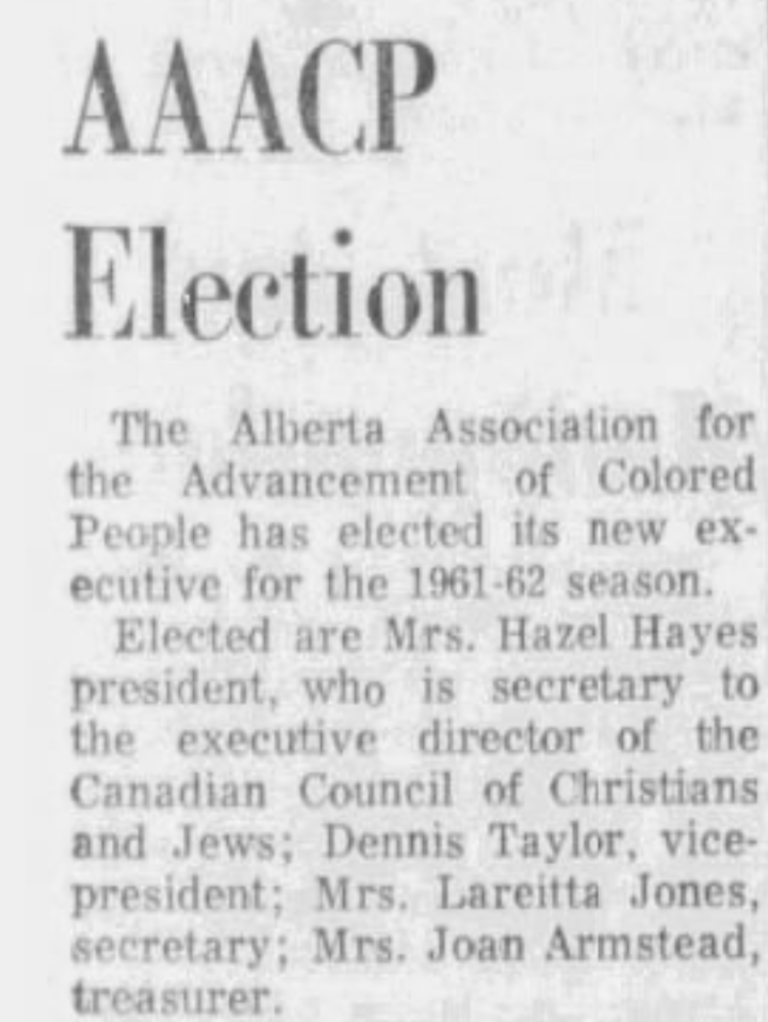
“AAACP Election,” The Calgary Albertan, 18 October 1961.
Hayes also focused on educating Calgary’s youth about racial prejudice. In 1962, she prioritized her personal attendance at youth events to speak about the racial issues that Calgary’s Black population faced. In particular, Hayes supported Western High School’s sociology association, which aimed to “create understanding between peoples of different races, religions, and social background[s].” She was the first guest speaker for the association.
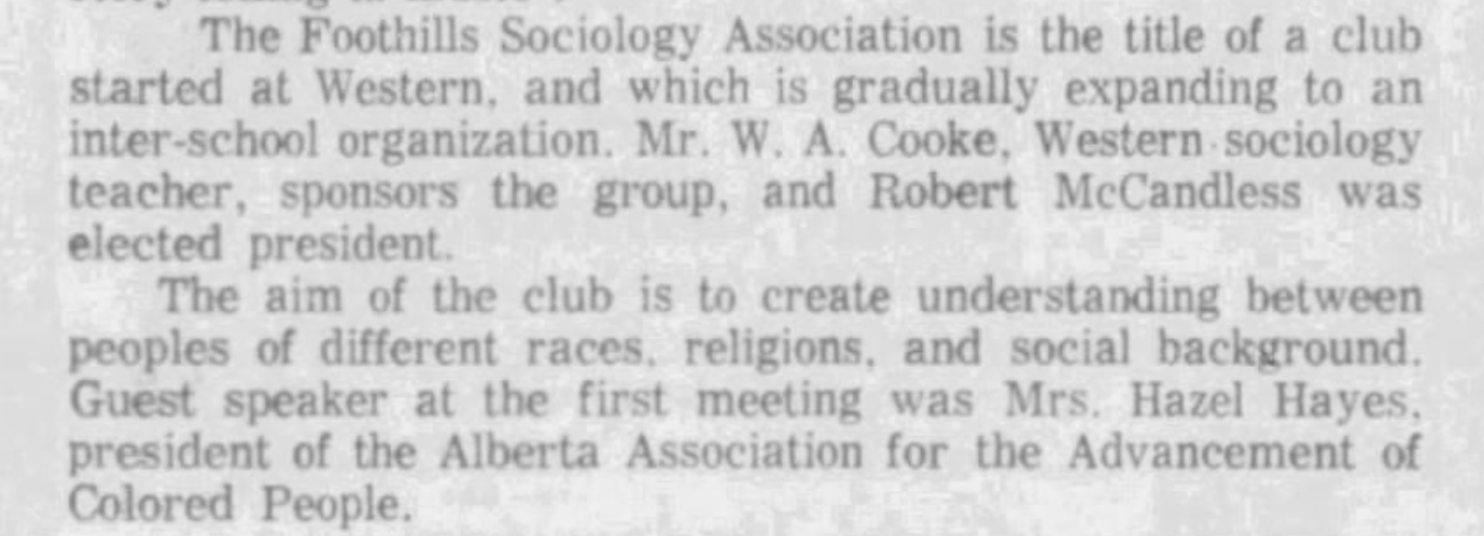
“Schoolgrounds to Campus,” Calgary Herald, 19 January 1962.
Frank Crockett was president of the AAACP from 1963 to 1964. During this time, Albertan newspapers reported on all major events surrounding the American Civil Rights Movement. Crockett led the AAACP to forge its most explicit ties to the movement and was the first president to publicly express support for it.
On November 23, 1963, Crockett sent a telegram to the White House offering condolences following the death of John F. Kennedy. He spoke on behalf of the AAACP and noted that Kennedy was “a champion for the rights of Negroes in the States,” and hoped that Kennedy’s support of civil rights legislation travelled across international borders.
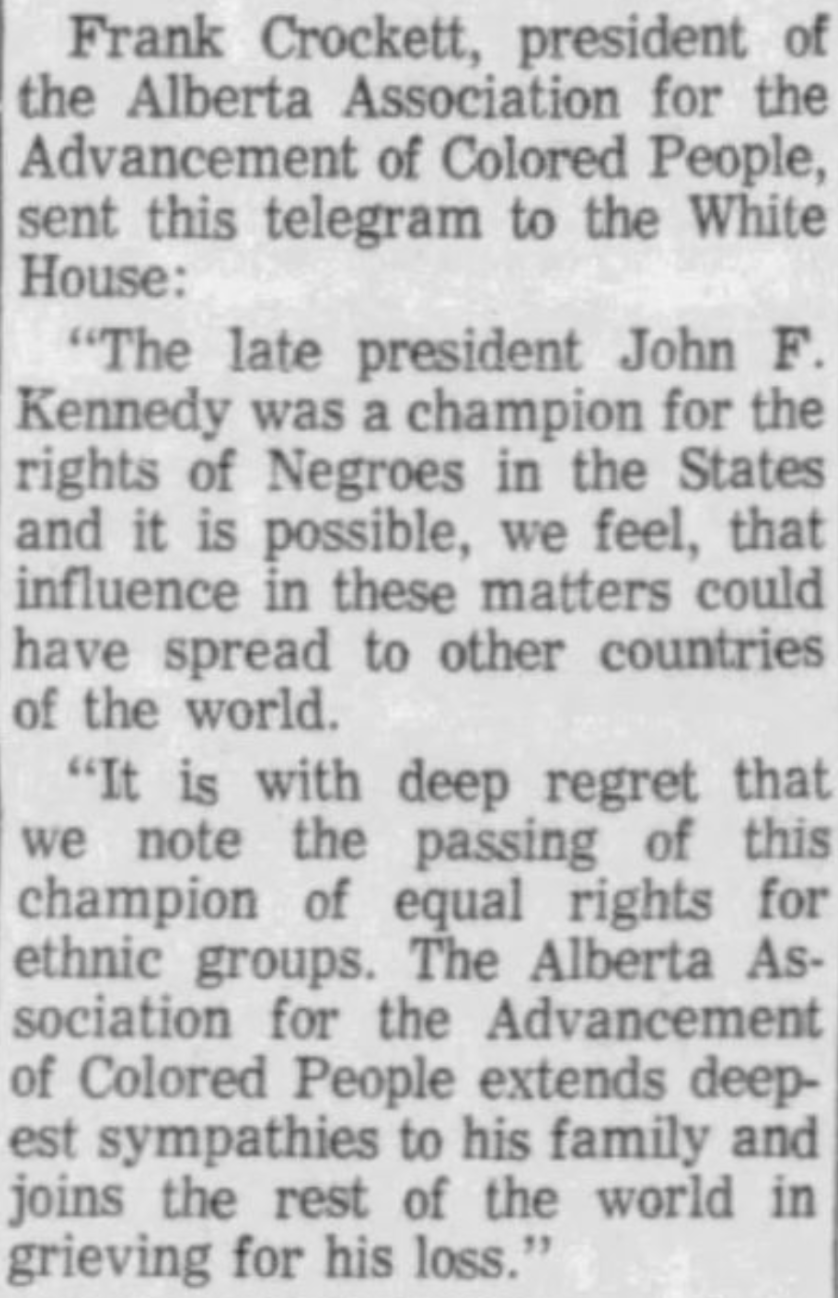
“Calgarians Send Tributes,” Calgary Herald, 23 November 1963.
Evidently, Crockett understood Kennedy’s support of Black Americans in the United States as an influential force that could extend past the American border. By publicly releasing the statement in the Calgary Herald on behalf of the AAACP, Crockett further emphasized the connection that existed between Black Albertans and the broader civil rights struggle.
A far cry from passive observation, Black Calgarians actively built local civil rights networks that challenged discrimination in Alberta and drew people’s eyes to the connection between America’s civil rights struggle and the one at home. Through cross-border labour organizing and strong community leadership, the story of Alberta’s Black organizing in the Civil Rights era proves that the fight for racial equality was not confined to the United States.
Sources:
[1] Melissa N. Shaw, “JENKINS, JAMES FRANCIS.” Dictionary of Canadian Biography, vol. 16 (2023).
[2] Melissa N. Shaw, “JENKINS, JAMES FRANCIS.” Dictionary of Canadian Biography, vol. 16 (2023).
[3] African American Registry, “The British Columbia Association for the Advancement of Coloured People is formed.”
[4] Sarah E. Hamill, “Sex, Race, and Motel Guests: Another Look at King v Barclay.” Osgoode Hall Law Journal 54, no. 3 (2017): 851-76.
[5] “Motel Owner’s Rights Discussed,” Calgary Herald, 29 October 1959.

Peyton Neustaedter is the 2026 Historian in Residence. Peyton Neustaedter is a born-and-raised Calgarian whose research focuses on Black history in the Canadian Prairies. Through community collaboration and archival research, her work examines the activism and place-making efforts of Black communities in Alberta. Neustaedter has a particular focus on the use of historical newspapers to uncover everyday life.
Subscribe to Heritage Calgary’s newsletter and follow us on social media to follow along with the Historian.
The Historian in Residence is presented in partnership with Calgary Public Library.